Attorney General Pam Bondi took to X over the weekend with a bold statement: “President Trump is leading the most transparent administration in American history.”
Her post was about efforts to release documents concerning the attempted assassination of Trump last July.
But the folks commenting in the replies had a completely different investigation in mind – the one into Jeffrey Epstein.
And they weren’t buying it.
“Liar,” snapped several people – along with many much harsher insults. One conservative YouTuber who mixes blistering tirades with Bitcoin promotions wrote: “I will vote for whatever President … campaigns on arresting Pam Bondi over the cover up of the Epstein Files.”
After folding into his coalition many non-traditional voters from the more fringe corners of the internet, Trump and members of his administration now find themselves coming face to face with the conspiratorial thinking they have stoked.
“This is the greatest cover-up by a president and for a president in history,” said one member of a Facebook group devoted to sleuthing about the case. “Epstein is the story and don’t let up.”
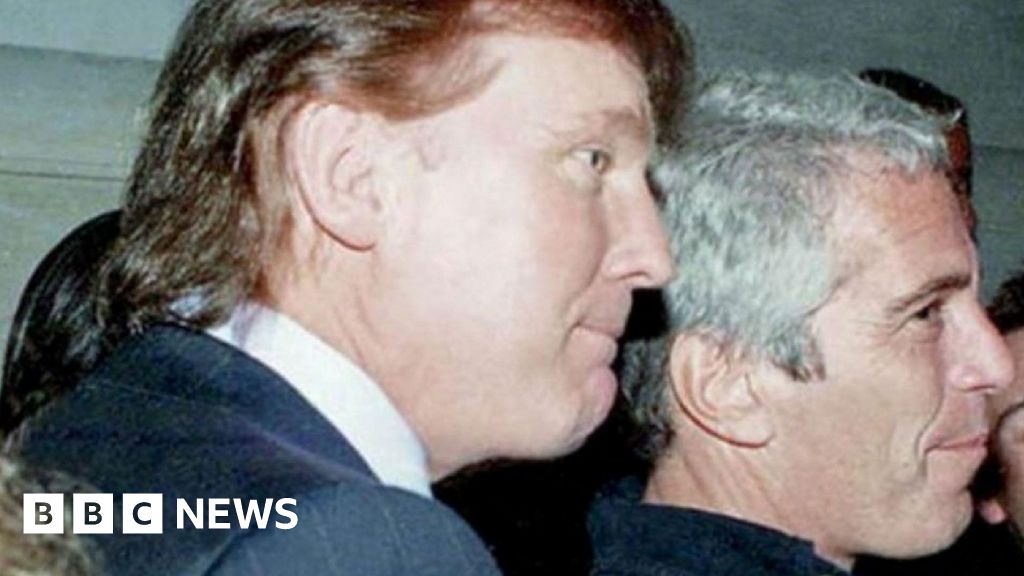
At issue isn’t so much the previously unreleased pictures of people like Bill Clinton, Mick Jagger, Michael Jackson and legendary news anchor Walter Cronkite in Epstein’s company – which is not an indicator of any wrongdoing – but the sea of blacked-out redactions in the files themselves.
On the campaign trail last year, Trump suggested that he would support the release of investigation files. In February, Bondi said they were “sitting on my desk right now to review”.
But after so much time and anticipation, Friday’s release landed with a whimper.
Joe Uscinski, an associate professor of political science at the University of Miami who studies conspiracy theories and conspiratorial thinking, says Trump’s coalition is now more about scepticism and antagonism towards institutions – and less about traditional Republican Party goals.
Many in the movement, he says, believe that huge numbers of children are being used for sex trafficking, beliefs that are bolstered by Epstein’s very real crimes as well as conspiracy theories like QAnon.
“People don’t necessarily want documents released – they want documents released which tell them that what they believe is true.”
The potential for political trouble is not lost on Trump’s inner circle. In a Vanity Fair article published prior to the document release, White House chief of staff Susie Wiles described the people compelled to vote for Trump because of his promises on Epstein as “Joe Rogan listeners” – in other words, younger men who aren’t traditionally into politics.
Wiles has called the story a “hit piece”. But she has not disputed specific quotes, including her assertion that Trump has not yet solidified a lasting Republican majority.
“The people that are inordinately interested in Epstein are the new members of the Trump coalition, the people that I think about all the time – because I want to make sure that they are not [only] Trump voters, they’re Republican voters,” she told the magazine.
Polls and experts back up the chief of staff’s concerns about the tenuous nature of Trump’s coalition.
A survey released in early December by the right-wing Manhattan Institute think tank labelled nearly a third of Trump’s supporters “New Entrant Republicans” – people who voted for the party for the first time in 2024. And the poll found that just over half of that category would “definitely” support a Republican in the 2026 mid-term elections.
“These voters are drawn to Trump but are not reliably attached to the Republican Party,” the institute concluded.
The possible fragility of the Trump coalition is playing out on several different levels.
One crucial group is a collection of social media stars and podcasters who stand mostly outside traditional Republican circles but have clout and influence online.
They were instrumental in keeping social media attention on the Epstein story long after the convicted sex offender’s death.
A group of influencers – including “Libs of TikTok” creator Chaya Raichik, conspiracy theorist and Turning Point USA activist Jack Posobiec, and elections organiser Scott Presler – were even invited to an event at the Department of Justice (DoJ) and given binders, which Bondi described as a “first phase” of Epstein document releases.
Little if anything new was in the binders, which caused a backlash. Outrage swelled further in July after the DoJ released a memo saying that there was no Epstein “client list” and rejecting conspiracy theories about his death in prison.
Yet following the most recent release, many of these same conservative influencers have been curiously silent.
Laura Loomer, a popular Maga social media influencer who has helped spread Epstein conspiracies online, claimed that they exonerated Trump from any wrongdoing.
“Maybe now the media will stop obsessing over these files,” wrote Loomer, who has mentioned Epstein at least 200 times on X this year alone.
Others – including several who were at the DoJ binder event – have not mentioned the document release at all, positively or negatively.
Their silence has been noted by other right-wing and far-right commentators, sparking online Maga infighting. And the row over the Epstein case is just one controversy currently roiling the movement, with arguments over free speech, anti-Semitism and Charlie Kirk’s legacy bursting out into the open at an annual conference put on by Turning Point USA this week.
Jared Holt, senior researcher at Open Measures, a company that analyses online extremism, says the debate over the Epstein files is just one controversy contributing to the challenges facing the Maga movement.
“At the beginning of the year, Maga was a triumphant intimidating cultural force, now the train is falling off the tracks and there’s no clear sign that it will be stabilising or rebounding anytime soon,” he says.
“It seems like the die-hard Trump base has atrophied over the course of the year,” Holt says, but notes that it’s too soon to tell if the recent heavily redacted document drop will have any significant impact on the sorts of “Joe Rogan listeners” Wiles is concerned about.
Prominent voices in Congress have been less shy than the influencer class about criticising the justice department. Soon-to-be-ex-Congresswoman Marjorie Taylor Greene lambasted the release, calling it “NOT MAGA”.
Thomas Massie, the Republican member of the House of Representatives from Kentucky who spearheaded legislation leading to the document release, spent the weekend lambasting the justice department online and on US weekend talk shows.
He accused Bondi and officials of being in violation of the law requiring the release of the files, and has joined forces with Democratic Representative Ro Khanna to push for greater transparency.
Massie has suggested that they could move to charge Bondi with “inherent contempt” for ignoring a congressional order – a move which could force further document disclosures.
Regardless of whether or not that happens, there may be further revelations in the next few days. Todd Blanche, the deputy attorney general, has promised hundreds of thousands more documents before the end of the year.
Source link