
Category: Uncategorized

  • Bobi Wine challenges President Yoweri Museveni for the second time

    Bobi Wine challenges President Yoweri Museveni for the second time


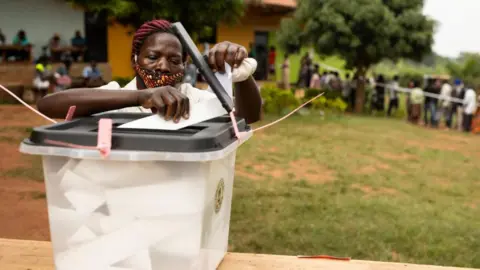
    Getty Images A ballot box outside is  in the foreground. A woman in a facemask is placing her vote inside.Getty Images

    As Ugandans go to the polls next week they are faced with a choice of propelling a leader into his fifth decade in power or backing a candidate seeking to capitalise on the desire for change from some quarters.

    President Yoweri Museveni, 81, in office since 1986, is aiming for a seventh successive election victory.

    His main challenger, pop-star-turned-politician Bobi Wine, 43, has promised a revolution in governance and sweeping reforms.

    Campaigning has been marked by the disruption of opposition activities, including the detention of activists and the breaking-up of rallies by police.

    With high rates of youth unemployment in a country where the majority of the population is under 30, the economy has become a key concern in the campaign.

    When is Uganda’s general election?

    Polling is scheduled for Thursday 15 January. Polls are due to open at 07:00 local time (04:00 GMT) and close at 16:00. Anyone in the queue at that time will be allowed to vote.

    What are Ugandans voting for?

    The 21.6 million registered voters will be taking part in three elections:

    • Presidential – there are eight candidates to choose from
    • Parliamentary (1) – 353 constituency MPs will be elected
    • Parliamentary (2) – 146 women representatives – one per local district – will be elected

    Who could be the next president?
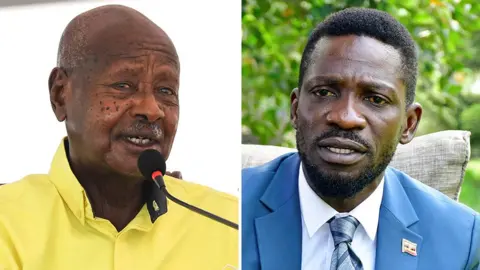
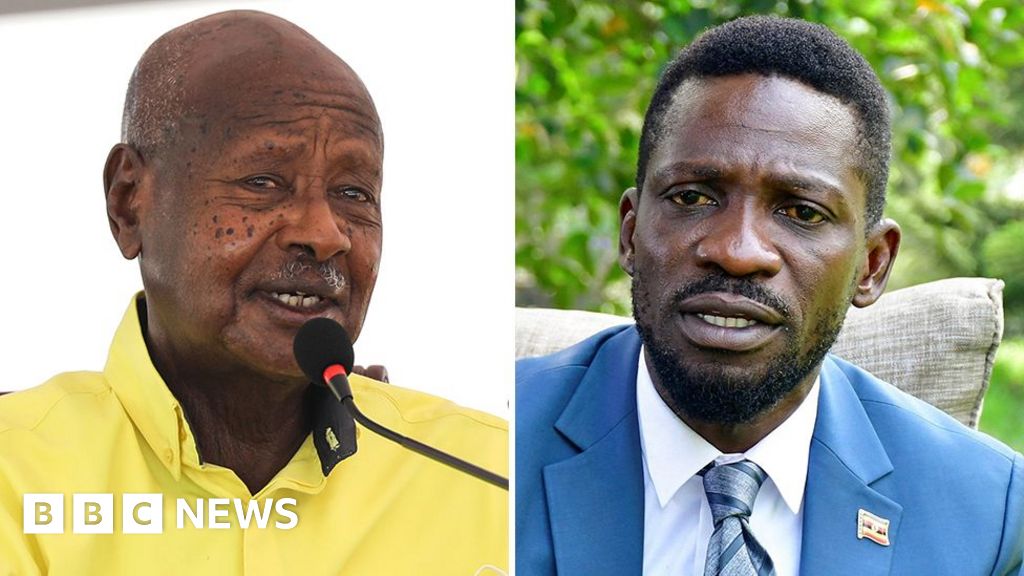
    Getty Images / Reuters A composite photograph of head and shoulders shots of Yoweri Museveni and Bobi WineGetty Images / Reuters

    This is the second time that President Yoweri Museveni (L) and Bobi Wine (R) are facing each other in a presidential election

    Museveni and Bobi Wine are the two front-runners among the all-male list of eight hopefuls.

    This is the second time they are facing off at the ballot box, with the president winning the 2021 poll, marred by allegations of rigging and a crackdown on the opposition, with 58% of the vote compared to Bobi Wine’s 35%.

    Yoweri Museveni – National Resistance Movement (NRM)

    Museveni first took power by force 40 years ago as the leader of a guerrilla army that pledged to restore democracy after years of civil war and the dictatorship of Idi Amin.

    Once feted as being part of a fresh generation of African leaders set to usher in a new democratic era, growing accusations of human rights abuses and harassment of opposition figures have soured that perception.

    Critics say he has ruled with an iron hand since he seized control and having gone back on pledges to step down, he is the only president most Ugandans have known.

    Currently the third longest-serving leader in Africa, Museveni has benefitted from two constitutional amendments – removing age and term limits – that have allowed him to keep running for office.

    He argues that he remains the country’s sole guarantor of stability and progress.

    Bobi Wine – National Unity Platform (NUP)

    The one-time hit maker Bobi Wine, whose real name is Robert Kyagulanyi, is widely thought to be the strongest of the seven opposition candidates.

    Dubbed at one point the “ghetto president”, he is seen as embodying youthful aspirations for change and he enjoys strong support among young, urban, working-class voters.

    Bobi Wine established himself as a serious contender five years ago, coming second and helping to restrict Museveni to the lowest share of the vote in any election he has contested. Bobi Wine’s NUP party became the largest opposition force in parliament.

    Since that vote, Bobi Wine has continued to face harassment from the security forces.

    The other candidates are Frank Bulira, Robert Kasibante, Joseph Mabirizi, Nandala Mafabi, Mugisha Muntu and Mubarak Munyagwa.

    Prominent opposition figure Kizza Besigye, who has run against Museveni four times, is not able to take part and remains in jail on treason charges after being arrested in neighbouring Kenya in 2024. He has denied any wrongdoing.

    What are the key concerns for voters?

    Economic issues, particularly unemployment, are weighing on the minds of many as they get ready to vote.

    The average income per person has been slowly but steadily rising since the pandemic but there do not seem to be enough jobs to match the bulging numbers of young people looking for work.

    There are also concerns about poor infrastructure and disparities in access to quality education and healthcare.

    The country has however managed to avoid the spike in the cost of living that has affected so many other countries in the region and led to pressure on those in power.

    Corruption is another major concern.

    Uganda comes 140th out of 180 countries on Transparency International’s annual Corruption Perceptions Index, with widespread bribery and nepotism reported in government institutions.

    Will the vote be free and fair?

    The conduct of elections in Uganda has often been criticised. This time round officials say the vote will be free and fair but UN experts have warned that may not be the case, citing what they describe as a “pervasive climate of fear” in Uganda.

    During the campaign period, opposition supporters have faced escalating harassment, including arrest on politically motivated charges, rights groups say.

    Bobi Wine’s rallies, unlike those of Museveni, have been disrupted by security forces.

    Amnesty International described the use of tear gas, pepper spray, beatings, and other violent acts as “a brutal campaign of repression” ahead of the vote.

    The government says the measures are necessary to ensure a peaceful election and prevent anyone from inciting riots on polling day.

    When it comes to the election itself, Bobi Wine has urged voters to stay at polling stations and safeguard their ballots to help prevent vote rigging.

    But election officials have said people should cast their ballots peacefully and then leave, assuring that the vote counting will be transparent and observed by party agents, the media and election monitors. Critics, however, have questioned the independence of the electoral commission.

    Despite government denials, there are also fears, based on previous experience, of an internet shutdown during the election aimed at preventing people from verifying results. The NUP says it has a vote-monitoring app that can overcome this issue by using Bluetooth technology.

    When will we know the results?

    Reuters A view from below of a warehouse worker arranging black metal ballot boxes. He is wearing a hi-viz jacket and red gloves.Reuters

    Election workers have been preparing for voting day

    How does the presidential vote work?

    The counting of votes should begin at each polling station as soon as voting closes with the results eventually being transmitted to a central tallying centre.

    A candidate must gain more than 50% of the votes cast nationwide to win the presidency in the first round, otherwise there will be a run-off within 30 days between the top two candidates.

    Museveni has always gained more than 50% in the initial round of voting.

    You may also be interested in:
    Getty Images/BBC A woman looking at her mobile phone and the graphic BBC News AfricaGetty Images/BBC


    Source link

  • Musk says X outcry is ‘excuse for censorship’

    Musk says X outcry is ‘excuse for censorship’


    Elon Musk has said critics of his social media site X are looking for “any excuse for censorship”, after its artificial intelligence (AI) chatbot Grok drew criticism after it emerged it was being used to create sexualised images of people without their knowledge or consent.

    Ofcom says it is conducting an urgent assessment of X in response, with the backing of Technology Secretary Liz Kendall.

    But the chairwomen of Parliament’s technology and media committees have both said they are concerned that “gaps” in the Online Safety Act might hinder the media regulator’s ability to deal with the matter.

    X has now limited the use of AI image function to those who pay a monthly fee, a change dubbed by Downing Street as “insulting” to victims of sexual violence.

    The BBC has seen several examples of the free AI tool undressing women and putting them in sexual situations without their consent.

    Ashley St Clair, the mother of one of Elon Musk’s children, told BBC Newshour that Grok had generated sexualised photos of her as a child.

    The conservative influencer said her image had been “stripped” to appear “basically nude, bent over”, despite her telling Grok that she did not consent to the sexualised images.

    St Clair, who filed a lawsuit against Musk last year seeking sole custody of their child, accused the social media site of “not taking enough action” to tackle illegal content, including child sexual abuse imagery.

    “This could be stopped with a singular message to an engineer,” she said.

    As of Friday morning, Grok was telling users asking it to alter images uploaded to X that “image generation and editing are currently limited to paying subscribers”, adding users “can subscribe to unlock these features”.

    An Ofcom spokesperson said: “We urgently made contact [with X] on Monday and set a firm deadline of today [Friday] to explain themselves, to which we have received a response.”

    “We’re now undertaking an expedited assessment as a matter of urgency and will provide further updates shortly.”

    Ofcom’s powers under the Online Safety Act include being able to seek a court order to prevent third parties from helping X raise money or be accessed in the UK – should the firm refuse to comply.

    Kendall has said she expects an update from Ofcom within days and that it would have the government’s full support should it decide to block X in the UK.

    But Dame Chi Onwurah, chairwoman of the innovation and technology committee, said she was “concerned and confused” about how the matter is “actually being addressed”, and has written to Ofcom and Kendall for clarification.

    Dame Chi said it was “unclear” under the Online Safety Act whether the creation of such images using AI was illegal, as was the responsibility of social media sites for what was shared on their platforms.

    “The act should really make something so harmful to so many people clearly illegal, and X’s responsibility should be clear,” she told BBC Radio 4’s Today programme.

    Caroline Dinenage, chairwoman of the culture, media and sport committee, likewise said she had a “real fear that there is a gap in the regulation”.

    “There are doubts as to whether the Online Safety Act actually has the power to regulate functionality – that means generative AI’s ability to nudify someone’s image,” she told BBC Breakfast.

    The use of Grok to generate non-consensual sexualised images has been condemned by politicians on all sides:

    • Prime Minister Sir Keir Starmer called it “disgraceful” and “disgusting”
    • Reform UK leader Nigel Farage said it was “horrible in every way” and that X “needs to go further” than the changes it had made to Grok on Friday, but he added that banning the platform would be an attack on free speech
    • The Liberal Democrats called for access to X to be temporarily restricted in the UK while the social media site was investigated.


    Source link

  • Medics describe overwhelmed hospitals as demonstrations enter second week

    Medics describe overwhelmed hospitals as demonstrations enter second week


    Helen Sullivan,BBC Newsand

    Soroush Negahdari & Roja Asadi,BBC News Persian

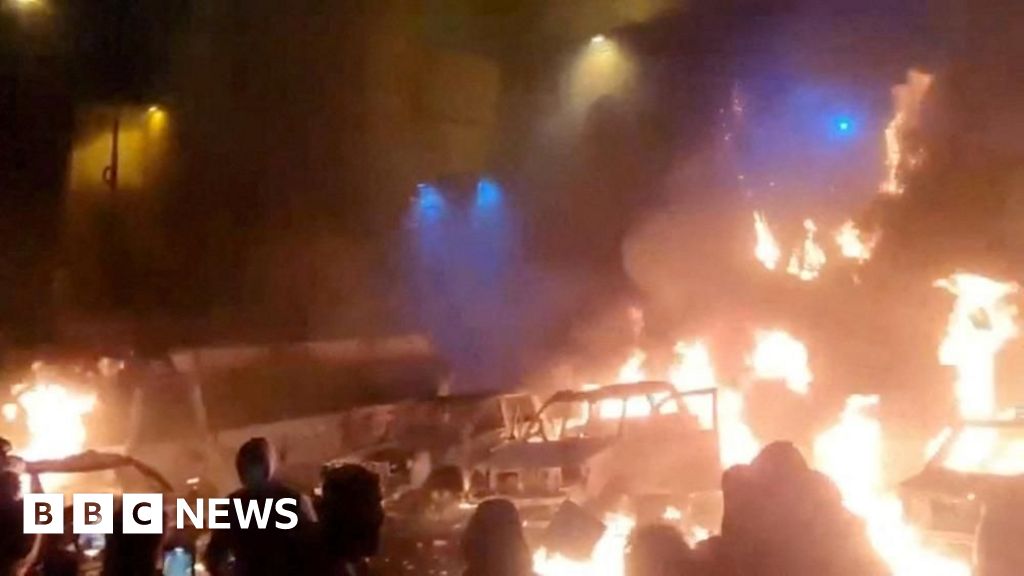
    Reuters A screen grab of a video shows protesters standing near burning vehicles in the dark in Tehran, Iran.Reuters

    Burning vehicles were pictured in Tehran on Friday night

    As protests in Iran continue and Iranian authorities issued coordinated warnings to protesters, a doctor and medic at two hospitals told the BBC their facilities were overwhelmed with injuries.

    One doctor said an eye hospital in Tehran had gone into crisis mode, while the BBC also obtained a message from a medic in another hospital saying it did not have enough surgeons to cope with the influx of patients.

    On Friday, US President Donald Trump said Iran was in “big trouble” and warned “you better not start shooting because we’ll start shooting too”.

    Iran, in a letter to the UN Security Council, blamed the US for turning the protests into what it called “violent subversive acts and widespread vandalism”.

    Meanwhile, international leaders called for the right to peaceful protest to be protected.

    Anti-government protests have taken place in dozens of cities, with two human rights groups reporting at least 50 protesters have been killed.

    The BBC and most other international news organisations are barred from reporting inside Iran, and the country has been under a near-total internet blackout since Thursday evening, making obtaining and verifying information difficult.

    A doctor from Iran, who contacted the BBC via Starlink satellite internet on Friday night, said Farabi Hospital, Tehran’s main eye specialist centre, had gone into crisis mode, with emergency services overwhelmed.

    Non-urgent admissions and surgeries were said to have been suspended, and staff called in to deal with emergency cases.

    The BBC also obtained a video and audio message from a medic in a hospital in the south-west city of Shiraz on Thursday. The medic said large numbers of injured people were being brought in, and the hospital did not have enough surgeons to cope with the influx. He claimed many of the wounded had gunshot injuries to the head and eyes.

    Watch: Protesters take to the streets of Tehran on Friday night

    Since protests began on 28 December, at least 50 protesters and 15 security personnel have been killed, according to the US-based Human Rights Activist News Agency (HRANA). More than 2,311 individuals have also been arrested, the group reported.

    The Norway-based Iran Human Rights (IHRNGO) said at least 51 protesters, including nine children, had been killed.

    BBC Persian has spoken to the families of 22 of them and confirmed their identities.

    United Nations Secretary General spokesperson Stéphane Dujarric said the UN was very disturbed by the loss of life.

    “People anywhere in the world have a right to demonstrate peacefully, and governments have a responsibility to protect that right and to ensure that that right is respected,” he said.

    French President Emmanuel Macron, UK Prime Minister Sir Keir Starmer and German Chancellor Friedrich Merz released a joint statement that said: “The Iranian authorities have the responsibility to protect their own population and must allow for the freedom of expression and peaceful assembly without fear of reprisal.”

    Iran’s Supreme Leader Ayatollah Ali Khamenei remained defiant in a televised address on Friday, saying: “The Islamic Republic came to power through the blood of several hundred thousand honourable people and it will not back down in the face of those who deny this.”

    Later, in remarks made to a gathering of supporters and broadcast on state television, Khamenei reiterated the message, saying Iran “will not shirk from dealing with destructive elements”.

    Iran’s UN ambassador accused the US of “interfering in Iran’s internal affairs through threats, incitement, and the deliberate encouragement of instability and violence,” in a letter to the UN Security Council.

    Watch: Why are there huge protests going on in Iran?

    At the White House on Friday, Trump said his administration was watching the situation in Iran carefully.

    “It looks to me that the people are taking over certain cities that nobody thought were really possible just a few weeks ago,” he said.

    He echoed earlier warnings to Iran’s leadership, saying: “We will be hitting them very hard where it hurts.” He added that any US involvement did not mean “boots on the ground”.

    On Thursday, Trump said he would “hit them very hard” if they “start killing people”.

    Later on Friday, the US said Iran’s foreign minister was “delusional” after he accused Israel and Washington of fuelling the protests.

    “This statement reflects a delusional attempt to deflect from the massive challenges the Iranian regime faces at home,” a US State Department spokesperson said in response to the comments by Foreign Minister Abbas Araghchi during a visit to Lebanon.

    Early on Saturday, US Secretary of State Marco Rubio posted on X: “The United States supports the brave people of Iran.”

    Meanwhile, the Iranian security and judicial authorities issued a series of coordinated warnings to protesters on Friday, hardening their rhetoric and echoing an earlier message of “no leniency” by Iran’s top security body, the Supreme National Security Council (SNSC).

    Iran’s National Security Council said “decisive and necessary legal action will be taken” against protesters, which it described as “armed vandals” and “disruptors of peace and security”.

    The intelligence arm of Iran’s Islamic Revolution Guard Corps (IRGC) said it would not tolerate what it described as “terrorist acts”, asserting that it would continue its operations “until the complete defeat of the enemy’s plan”.


    Source link