
Category: Uncategorized

  • What we know about Trump’s ‘framework of a future deal’ over Greenland

    What we know about Trump’s ‘framework of a future deal’ over Greenland


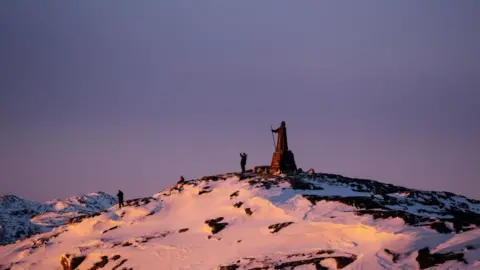
    EPA Sun setting on a snow-capped hill in NuukEPA

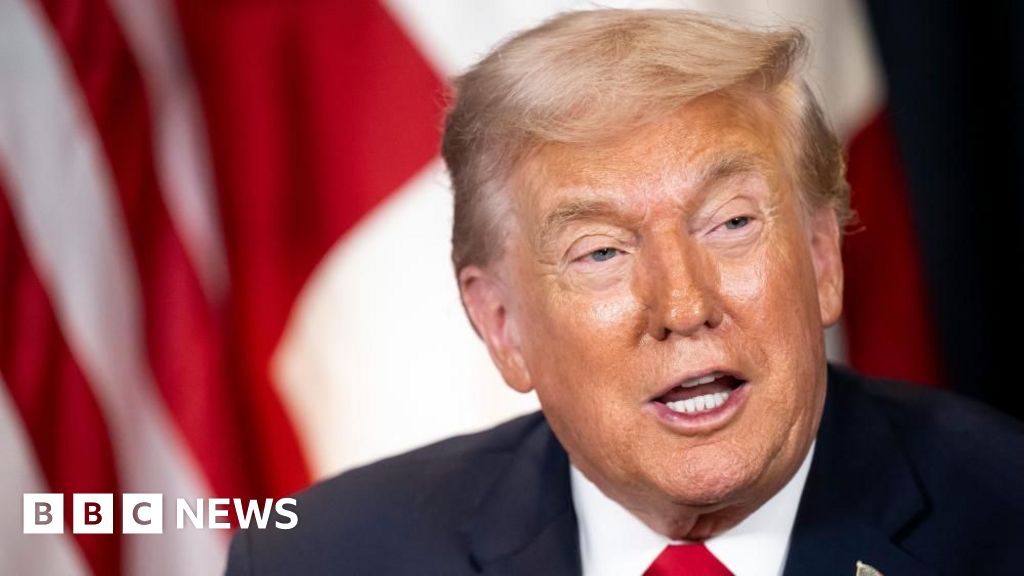
    US President Donald Trump has announced that there is a “framework of a future deal with respect to Greenland”.

    The statement came as a surprise after days of mounting tensions, culminating with a threat to impose economic sanctions on eight close US allies which have opposed his plans to seize the semi-autonomous territory of Denmark.

    So what could this deal entail and will it be acceptable to Denmark and Greenland – both of which have made it clear they will not relinquish sovereignty of the world’s largest island.

    What has been said about the framework deal?

    President Trump made the announcement on his Truth Social media platform on Wednesday, after talks at the World Economic Forum in Davos, Switzerland.

    “Based upon a very productive meeting that I have had with the Secretary General of NATO, Mark Rutte, we have formed the framework of a future deal with respect to Greenland,” he said.

    “This solution, if consummated, will be a great one for the United States of America, and all Nato Nations.”

    He did not give details, but said talks would continue to reach the deal.

    Rutte, for his part, said he had not discussed the key issue of Danish sovereignty over Greenland in his meeting with Trump.

    The view in Denmark is that the issue is far from over and that any agreement must still be hammered out together between Greenland and Denmark and the US.

    Danish Prime Minister Metter Frederiksen said she been having regular conversations with Rutte and the Danes could negotiate “on everything political; security, investments, economy”.

    “But we cannot negotiate on our sovereignty. I have been informed that this has not been the case either,” she said in a statement on Thursday.

    Nato spokeswoman Allison Hart said in a statement after the meeting between Trump and Rutte: “Negotiations between Denmark, Greenland, and the United States will go forward aimed at ensuring that Russia and China never gain a foothold – economically or militarily – in Greenland.”

    However, one of two Greenlandic lawmakers in the Danish parliament Aaja Chenmitz said “Nato in no case has the right to negotiate on anything without us, Greenland. Nothing about us without us”.

    The UK Foreign Secretary Yvette Cooper said she hoped this meant that there would be “the direct discussions that Denmark had asked for, for Denmark, Greenland and the United States on the way forward around Greenland, protecting Greenland’s sovereignty”.

    Is there any detail about the possible deal?

    Denmark and Greenland’s comments about sovereignty being non-negotiable. appeared to push back on reports that among the ideas being mooted unofficially is an arrangement similar to two military bases in Cyprus which are controlled by the UK.

    The New York Times quotes anonymous officials as saying one idea under discussion is for Denmark to cede sovereignty over small areas of Greenland where the US would build military bases, as in the UK model.

    Akrotiri and Dhekelia have been under UK sovereignty since Cyprus became independent in 1960. That treaty has been modified since, but essentially it is considered British territory.

    Asked whether whether she knew what was in the framework agreement, Yvette Cooper said only that there were two things that she now expected to happen.

    “The first is a return to some of the discussions that Denmark and Greenland had asked for with the United States, where they had begun those discussions in Washington last week and that’s what they want to focus on,” the UK foreign secretary said.

    “It’s some very practical discussions about Greenland’s security, whilst being very, very clear that Greenland sovereignty is not up for negotiation.”

    In arguing in favour of seizing Greenland, Trump has mentioned the threat of Chinese and Russian vessels around the island, even though defence officials insist there has been no increased threat from Russia and China recently.

    On this point, Nato allies have tried to reassure the US that they will boost up security in the Arctic and Mark Rutte told Reuters news agency on Thursday that the framework deal would also require this contribution.

    “We will come together in Nato with our senior commanders to work out what is necessary,” he said, adding: “I have no doubt we can do this quite fast. Certainly I would hope for 2026, I hope even early in 2026.”

    One of the ideas the UK has been calling for is to set up an Arctic Sentry, said Yvette Cooper on Thursday – which was a “very similar to the approach that Nato has taken to the Baltic sentry” – a mission to increase the surveillance of ships in the Baltic Sea after critical undersea cables were severed.

    Will any deal short of ‘ownership’ please Trump?

    The US has had a military presence in Greenland since after World War Two.

    Under a 1951 agreement with Denmark, the US can bring as many troops as it wants to Greenland. It already has more than 100 military personnel permanently stationed at its Pituffik base in the north-western tip of the territory.

    The US does have military bases in many countries – including Germany – but they do not constitute sovereign territory.

    Trump has insisted a lease agreement over Greenland is not good enough.

    “Countries have to have ownership and you defend ownership, you don’t defend leases. And we’ll have to defend Greenland,” he said two weeks ago.

    In order to acquire the island, he has threatened to use force – until a U-turn in Davos where he dropped that threat to the relief of his Nato allies.

    Nato was founded in 1949 on the principle that an attack on one ally is an attack on all. These attacks were meant to come from outside, and Denmark had made it clear a military attack would spell the end of the trans-Atlantic alliance, where the US is the major partner.

    Why does Trump want Greenland?

    Trump has sought to buy Greenland off Denmark since his first time in office – and he is not the only US president to try to do so.

    Trump says the US needs Greenland to protect against possible attacks from Russia and China.

    He has also said Greenland is essential for his plan to build a Golden Dome defence system, designed to protect the US against missile attacks, and that European allies could co-operate in this endeavour.

    Along with Greenland’s strategic location, the US has spoken about the island’s vast – and largely untapped – reserves of rare earth minerals, many of which are crucial for technologies including mobile phones and electric vehicles.

    Trump has not said the US is after Greenland’s riches, but that a US control over the island “puts everybody in a really good position, especially as it pertains to security and to minerals”.

    “It’s a deal that’s forever.”
    Ros Atkins on… Trump’s Davos speech claims


    Source link

  • Trump to meet Zelensky as US envoy says ending Russia war down to one issue

    Trump to meet Zelensky as US envoy says ending Russia war down to one issue


    Paul KirbyEurope digital editor

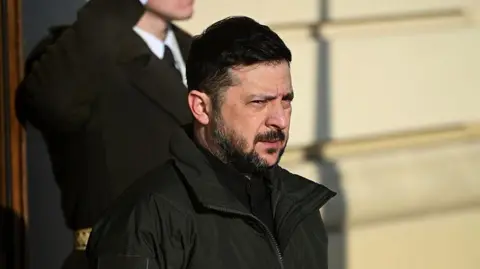
    Aleksandr Gusev/SOPA Images A man in a dark beard and black coat against a yellow backgroundAleksandr Gusev/SOPA Images

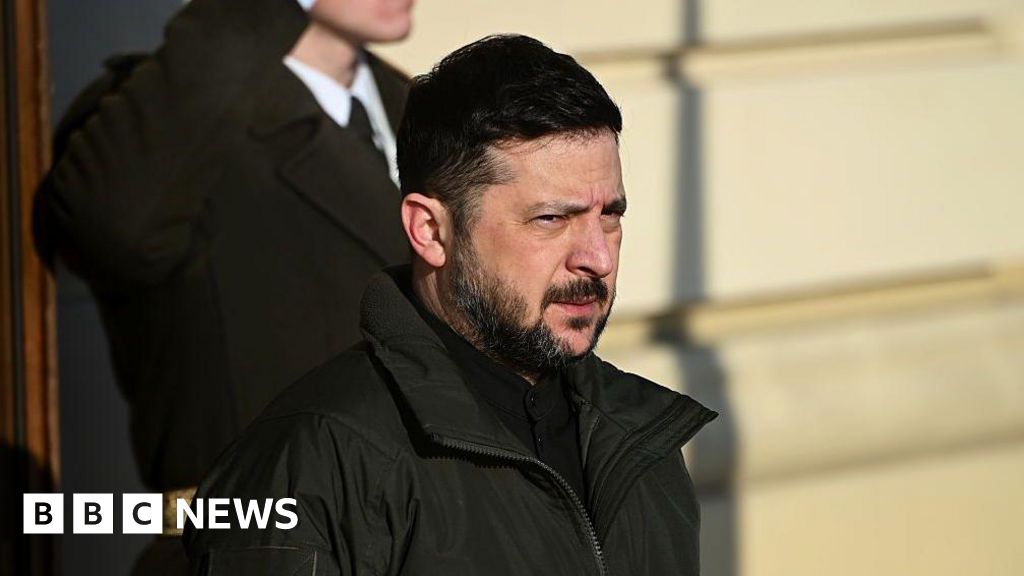
    Ukraine’s Volodymr Zelensky arrived in Davos on Thursday ahead of his talks with President Donald Trump (file pic)

    US President Donald Trump will meet Volodymyr Zelensky at Davos on Thursday, after his envoy Steve Witkoff expressed optimism about finalising a deal to end the war in Ukraine.

    “I think we’ve got it down to one issue and we have discussed iterations of that issue, and that means it’s solvable,” Witkoff said ahead of his trip to Moscow for talks with Russia’s Vladimir Putin.

    Witkoff did not specify the single issue but recent talks have focused on the future status of Ukraine’s industrial heartland in Donbas, with a proposal for a demilitarised and free economic zone in exchange for security guarantees for Kyiv.

    “If both sides want to solve this we’re going to get it solved,” Witkoff said.

    Ahead of Witkoff’s visit to Moscow with Trump’s son-in-law Jared Kushner, the US president said on Wednesday that he thought both Putin and Zelensky were at a point where they could come together and get a deal done: “If they don’t, they’re stupid.”

    Last week, Trump said he thought Putin was “ready to make a deal” but that Zelensky was “less ready”.

    The Ukrainian president travelled through the night to get to Davos on Thursday.

    He had initially called off his trip to deal with the aftermath of Russian strikes on Kyiv’s power infrastructure which have left large areas of the capital without heating, water or power during the harshest winter so far in almost four years of Russia’s full-scale war. Thousands of apartment blocks remain without heating.

    There has been concern in Kyiv that Trump’s spat with his European Nato allies over the future of Greenland has deflected him from the war in Ukraine.

    Zelensky said after talks with Trump in Miami late last month that a 20-point US plan to end the war was 90% ready and that Ukraine’s position on Donbas, in eastern Ukraine, was different to Russia’s.

    Specifically, Zelensky has offered to withdraw troops from the 25% of Donetsk region that Ukraine still controls by up to 40km (25 miles), to create an economic zone, if Russia does the same. Russian forces have advanced slowly in the east in the past year and Putin is known to covet control of the entire region.

    The other big sticking point that Zelensky highlighted last month was future control of Ukraine’s enormous Zaporizhzhia nuclear plant, seized by Russia in March 2022.

    Kremlin spokesman Dmitry Peskov said on Thursday that discussion with the American envoys would continue “on the Ukrainian issue and other related topics” and refused to say whether he shared Witkoff’s optimism on achieving a deal.

    Putin has also not yet decided whether to join Trump’s Board of Peace on Gaza.

    Ukraine’s president had hoped to sign two key documents with Trump at Davos covering future security guarantees as well as economic prosperity, but said there was “one mile left to finalise these documents”.

    It is not yet clear if any signings will take place during their meeting at the World Economic Forum.

    However, the head of Ukraine’s national security and defence council, Rustem Umerov, said on Wednesday night that his team in Davos had discussed the issues of economic development, post-war recovery and security guarantees with their US counterparts.


    Source link

  • UK holds off joining Trump’s peace board over Putin concerns

    UK holds off joining Trump’s peace board over Putin concerns


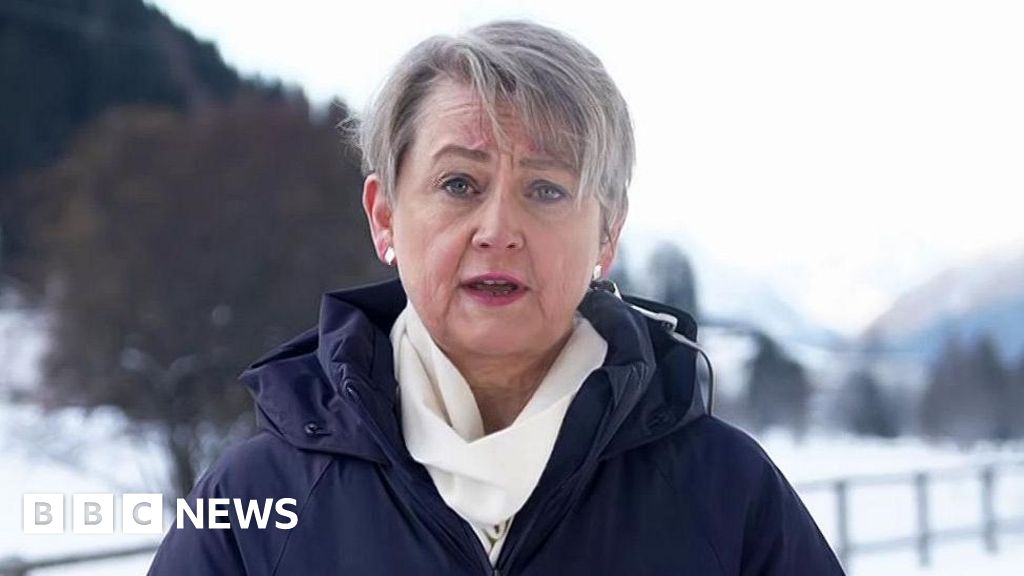
    Foreign Secretary Yvette Cooper has said the UK will not yet be signing up to US President Donald Trump’s proposed Board of Peace over concerns about Russian leader Vladimir Putin’s possible participation.

    Cooper told the BBC the UK had been invited to join the board but “won’t be one of the signatories today” at a planned ceremony at the World Economic Forum in Davos.

    The foreign secretary described the board as a “legal treaty that raises much broader issues” than the initiative’s initial focus on ending the Israel-Hamas war in Gaza.

    The charter proposed by the White House does not mention the Palestinian territory and appears to be designed to replace some functions of the United Nations.

    Countries including Saudi Arabia, Turkey, Egypt and Israel have said they will become members of the board, and at Davos, President Trump said Putin had accepted an invitation to join the initiative.

    But President Putin has not confirmed this and earlier he said his country was still studying the invitation.

    Speaking to the BBC’s Breakfast programme from Davos, Cooper said the UK had received an invitation to join the board and strongly supported Trump’s 20-point plan to end the war in Gaza.

    “That’s why we are also clear we want to play our part in phase two of the Gaza peace process,” Cooper said.

    But she added: “We won’t be one of the signatories today because this is a legal treaty that raises much broader issues.

    “And we do also have concerns about President Putin being part of something that’s talking about peace when we’ve still not seen any signs from Putin that there will be commitment to peace in Ukraine.”

    She said Putin had shown no willingness “to come and make that agreement and that’s where the pressure needs to be now”.

    “But we will have continuing international discussions including with our allies,” the foreign secretary said.

    Diplomatic relations between the US and the UK are on shakier ground after Trump threatened to impose tariffs on European nations if his demand to hand control of Greenland to his country was not met.

    But Trump appears to have backed down, saying the US was exploring a potential deal on Greenland after talks with the Nato security alliance, as he dropped planned tariffs on eight European countries and ruled out using force to take the island.

    Cooper welcomed the apparent climbdown on Greenland and said the UK and its European allies had put forward “positive, constructive proposals” on security in the Arctic.

    But when asked about the Board of Peace, Cooper echoed other UK cabinet ministers who in recent days have been expressing concerns over Putin’s potential role in the scheme, given Russia’s ongoing invasion of Ukraine.

    The UK has been one of Ukraine’s staunchest allies and together with France, signed a declaration of intent on deploying troops to the country if a peace deal is made with Russia.

    As talks to end the war in Ukraine continue, President Trump and Ukrainian President Volodymyr Zelensky are due to meet in Davos on Thursday.

    On Wednesday, Trump repeated his often-stated belief that Putin and Zelensky were close to a deal.

    Trump’s Board of Peace was originally unveiled by the White House as part of a plan to rebuild Gaza and design its future governance.

    But the leaked text of the board’s founding charter goes far beyond that purpose.

    The text says the board would be “an international organisation that seeks to promote stability, restore dependable and lawful governance, and secure enduring peace in areas affected or threatened by conflict”.

    The leaked document says the Board of Peace’s charter will enter into force once three states formally agree to be bound by it, with member states given renewable three-year terms and permanent seats available to those contributing $1bn (£740m), it said.

    The charter declared the body as an international organisation mandated to carry out peace-building functions under international law, with Trump serving as chairman – and separately as the US representative – and holding authority to appoint executive board members and create or dissolve subsidiary bodies.

    Last Friday, the White House named seven members of the founding Executive Board, including US Secretary of State Marco Rubio, Middle East envoy Steve Witkoff, Trump’s son-in-law Jared Kushner and former UK Prime Minister Tony Blair.

    More have now said they will join it, including Pakistan, Turkey, Egypt, Saudi Arabia and Qatar.

    The Vatican has said the Pope has also received an invitation.


    Source link