Sudan accuses Uganda of flouting international law by meeting Rapid Support Forces boss Mohamed Hamdan Dagalo.
Source link
Category: Uncategorized
-
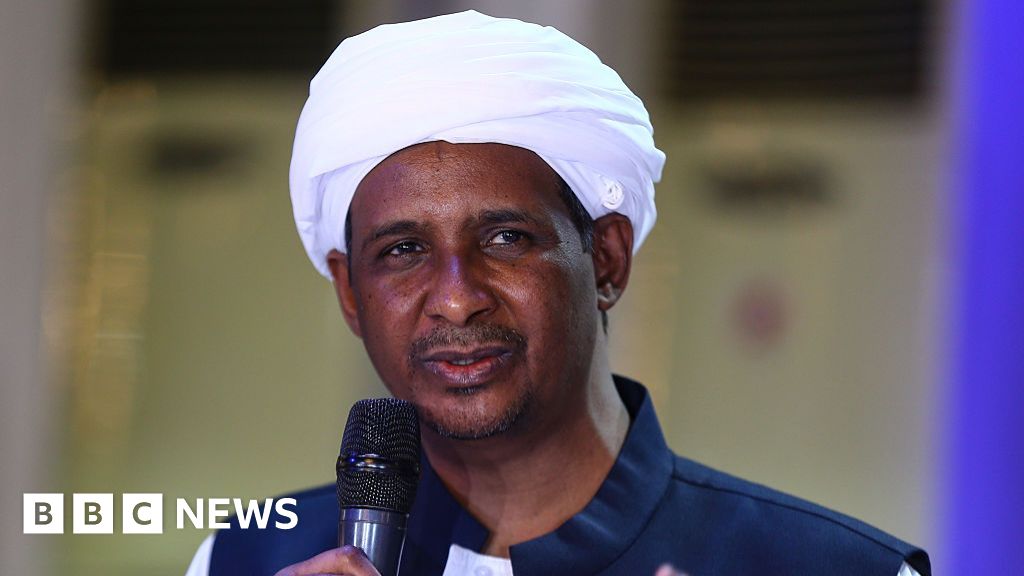
'Affront to humanity': Sudan slams Uganda for hosting RSF paramilitary boss
-
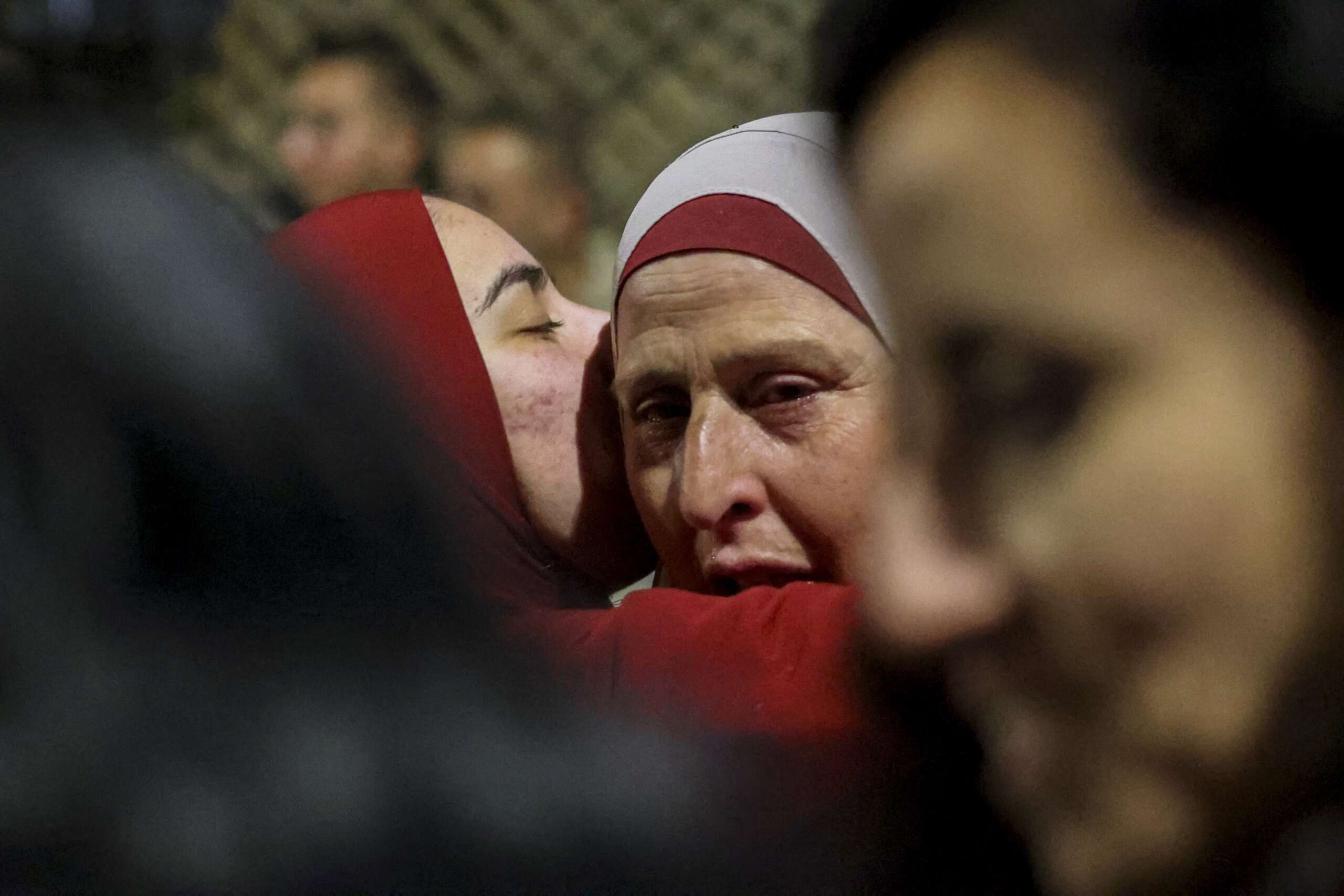
Palestinian Women Arrested to Bait Their Relatives Israel Labels as “Wanted”
Did you know that Truthout is a nonprofit and independently funded by readers like you? If you value what we do, please support our work with a donation.
Israeli soldiers stormed Suhair Barghouti’s home in the town of Kobar, north of Ramallah in the central West Bank, on Jan. 1. They were looking for her son, Muhammad, 26, who had been released just months earlier after two years of administrative detention without charge.
Muhammad wasn’t home at the time; he was visiting his wife’s family in Jericho. Upon learning he wasn’t around, the soldiers immediately handcuffed Barghouti, 66, and blindfolded her.
“I asked them, ‘Why are you arresting me?’ The officer replied, ‘Simply because you’re his mother. If he doesn’t come now, we’ll arrest you instead,’” Barghouti told Prism. “I was confused and scared and didn’t know what to do.”
It wasn’t the first time Barghouti was arrested by Israeli authorities in an attempt to pressure her children to surrender. In 2019, the Israeli army detained her for a month while pursuing her son Asim, who was later arrested and sentenced to four life sentences for allegedly killing two Israeli soldiers a day after soldiers killed his brother Saleh.
“They arrested me and put me in solitary confinement in cold, harsh conditions,” Barghouti said. “Every day, the officer told me I was being arrested because I’m Asim’s mother. My only crime, then and now, is being a mother.”
Israel conducts daily mass arrest campaigns targeting Palestinians throughout the West Bank. Among those arrested are women — not for any crime they committed, but simply because they are related to those Israel labels as wanted.
There are no clear statistics on the number of women arrested under this policy due to their repeated arrests and releases.
Sixty-six Palestinian women, including three children, are detained in Israeli prisons, according to a Feb. 12 statement from the Palestinian Prisoners Club. According to a January Quds News Network report, about half of detained women at that time were mothers, and about a third were held under administrative detention, which can be renewed indefinitely without charge or trial.
The Prisoners Club said the Israeli occupation has targeted women in an unprecedented manner since the beginning of the genocide in Gaza, with more than 680 Palestinian women arrested, not including dozens more estimated to have been arrested from Gaza.
An Open Wound
That January day as soldiers led Barghouti to one of their vehicles, her phone rang. It was Muhammad. An officer answered and told him that his mother was being detained until he surrendered. Muhammad said he was on his way and asked them to remove her handcuffs because she couldn’t endure such suffering at her age, but they refused until he arrived home.
“I asked them, ‘Why are you arresting me?’ The officer replied, ‘Simply because you’re his mother. If he doesn’t come now, we’ll arrest you instead.’”
“When Muhammad arrived, they removed my handcuffs and let me go. Then they arrested him, still using the same handcuffs they had put on me,” al-Barghouti said. “He tried to say goodbye, but they prevented him.”
Muhammad was placed under administrative detention for six months, according to his mother, as his wife expected to give birth to their first child in a few weeks.
Collective Punishment
It has become a well-known policy in the West Bank for Israeli forces to arrest the mother, wife, or sister of someone, often a man, they seek to arrest in order to pressure them into surrendering.
However, this practice falls under the category of collective punishment, which is prohibited under international law, according to Helmi Al-Araj, director of Hurryyat, also known as the Center for Defense of Liberties and Civil Rights.
Al-Araj told Prism that according to any law, every person is responsible for themselves. But Israel, which uses civilians as human shields in the West Bank and the Gaza Strip, also uses Palestinian people as a means of punishment against their relatives.
“Palestinian women are subjected to other policies due to this relationship, such as being prevented from traveling or having their lives restricted through frequent home raids or summons for interrogation. It’s simply because one of her family members has a security record in Israel’s files,” he explained.
The punishment becomes collective and compounded when Palestinian women are subjected to this oppression, he said. Sometimes a person is arrested and released, but they and their family continue to pay the price for years without any justification.
The Israeli human rights organization B’Tselem stated in a 2018 report about the arrest of several Palestinians in Jerusalem that “it is clearly unacceptable and unlawful to arrest individuals suspected of no wrongdoing for the express purpose of putting pressure on their family members to turn themselves in.”
The report pointed out that the arrests took place over several weeks and involved dozens of officers.
“They are clearly not the result of some individual officer’s whim. Instead, they demonstrate the utter disregard for the rights of Palestinians evinced by Israel’s security establishment and the intolerable ease with which it lets itself violate their rights, disrupt their lives and undermine their safety,” the organization added.
“I Don’t Remember How Many Times”
Hanan Awawdeh, 48, doesn’t recall the number of times she has been arrested in the past two years.
The latest was on Dec. 12, when the Israeli army raided her home in the town of Deir Samet, south of Hebron in the southern West Bank.
Soldiers asked for her husband, Atef, who wasn’t there. They handcuffed Awawdeh and took her to their military vehicle in front of her children and grandchildren, who began crying, screaming, and begging the soldiers to let her go.
“They put me on the floor of the military vehicle and drove me through the town. Every time I moved or tried to adjust my position, the female soldier would hit me on the shoulder with her weapon until it tore my ligaments,” she told Prism.
Awawdeh remained detained for nine hours until soldiers arrested her husband. Upon her release, she was immediately taken to the hospital due to the beatings and abuse she had endured.
Two years prior, Awawdeh had been repeatedly arrested when Israel was pursuing her son, Ahmed, who was later killed by the Israeli army after joining armed groups in the Jenin refugee camp.
“I don’t remember how many times they arrested me to pressure him. Maybe 23 times, I’m not sure,” she said. “Each time, they ransacked the house, destroying all the furniture, and arrested me, his father, and his two brothers. Even after they killed him, they continued to raid the house from time to time to harass us.”
Ahmed was buried in Jenin after his assassination. Because a mother’s heart cannot bear such a cruel farewell, Awawdeh said she visits his grave occasionally, hoping to find some solace. However, an Israeli officer threatened her, telling her not to visit the grave or she would be arrested again.
Mourning Is Forbidden
On the 30th anniversary of engineer and Palestinian Resistance leader Yahya Ayyash’s assassination on Jan. 5, his wife, Hiyam Ayyash, wrote a Facebook post mourning him. A few days later, Israeli soldiers arrested her at her home in Nablus on charges of “incitement,” and, in what was dubbed a provocative act, posed for a photo with her handcuffed and blindfolded.
According to the statement from the Palestinian Prisoners Club, the most prominent charge Israel leveled against women it has detained is “incitement” via social media. The Prisoners Club described this as “a vague claim used by the occupation to expand the scope of arrests and impose further censorship and control, turning social media into a tool of repression against anyone who tries to express their views.”
After Ibrahim Za’aqiq was killed by Israeli forces in July 2024, his mother, Suhair Abu Hashim, posted a photo of her son on one of her social media accounts.
On Nov. 19, the Israeli army stormed Abu Hashim’s town of Beit Ummar, north of Hebron, and launched a widespread arrest campaign, detaining 150 Palestinians in just a few hours.
“During the campaign, my sister’s house was stormed, and she was immediately arrested after her house was searched and she was beaten inside,” her brother Fadi Abu Hashim told Prism. “Then they took her to the football field with the other detainees and kept them for hours in the freezing cold, handcuffed and motionless. She was the only woman among those arrested.”
After nearly seven hours of detention, the soldiers released all the other detainees except Suhair Abu Hashim. They took her to their vehicles and, according to what residents of the town told her family, abused her by pushing and cursing.
The charge against her was ready-made: mourning her son on social media, which falls under the definition of “incitement” according to Israeli intelligence. She was later placed under administrative detention for six months, where she remains.
“My sister is living in harsh conditions in prison, not to mention her psychological state after the death of her son,” Abu Hashim said. “She suffers from a lack of basic human needs in Israeli prisons.”
Prism is an independent and nonprofit newsroom led by journalists of color. We report from the ground up and at the intersections of injustice.
A terrifying moment. We appeal for your support.
In the last weeks, we have witnessed an authoritarian assault on communities in Minnesota and across the nation.
The need for truthful, grassroots reporting is urgent at this cataclysmic historical moment. Yet, Trump-aligned billionaires and other allies have taken over many legacy media outlets — the culmination of a decades-long campaign to place control of the narrative into the hands of the political right.
We refuse to let Trump’s blatant propaganda machine go unchecked. Untethered to corporate ownership or advertisers, Truthout remains fearless in our reporting and our determination to use journalism as a tool for justice.
But we need your help just to fund our basic expenses. Over 80 percent of Truthout’s funding comes from small individual donations from our community of readers, and over a third of our total budget is supported by recurring monthly donors.
Truthout has launched a fundraiser to add 310 new monthly donors in the next 4 days. Whether you can make a small monthly donation or a larger one-time gift, Truthout only works with your support.
-

Rondale Moore: NFL receiver dies aged 25
Moore spent three years with the Arizona Cardinals after being drawn as a second-round pick in the 2021 draft.
He joined the Atlanta Falcons in 2024 but a knee injury saw him miss the entire campaign, before joining the Vikings in 2025.
“While Rondale had been a member of the Vikings for a short time, he was someone we came to know well and care about deeply,” said Vikings coach Kevin O’Connell.
“He was a humble, soft-spoken and respectful young man who was proud of his Indiana roots.
“We are all heartbroken by the fact he won’t continue to live out his NFL dream and we won’t all have a chance to watch him flourish.”
The NFL said they were “deeply saddened” by the “tragic passing” of Moore.
After making his NFL debut in 2021, Moore went on to make 135 catches for 1,201 yards for the Cardinals over three seasons in Arizona.
“We are devastated and heartbroken by today’s news,” the Cardinals said in a statement.
“Our thoughts and deepest condolences are with his family, friends, team-mates, and everyone who loved him and had the privilege of knowing such a special person.”
Former Cardinals team-mate JJ Watt said: “Can’t even begin to fathom or process this. There’s just no way. Way too soon. Way too special. So much left to give. Rest in peace Rondale.”
The NFL Players Association, which is a union for players’ welfare, said: “In moments like this, we are reminded of how much our players carry, on and off the field.
“To our members: please know that support is always within reach. Check on your team-mates and prioritise your mental health.”